9
You turn the ignition key on a crisp morning, expecting the familiar hum of your engine, but you are greeted instead by a violently flashing dashboard. Warning indicators for the check engine light, antilock braking system, power steering, and traction control illuminate all at once. The starter clicks weakly, or the engine turns over but immediately stumbles and dies. When the tow truck drops your vehicle at the repair shop, the technician delivers the verdict: mice, rats, or squirrels made a feast out of your primary engine wiring harness.
Replacing or repairing a modern vehicle wiring harness can easily run anywhere from $1,500 to well over $6,000. Because modern harnesses weave through the firewall, under intake manifolds, and behind deep interior dash panels, the parts cost is often dwarfed by dozens of hours of painstaking labor.
Rodent damage is far more common than most drivers realize, yet it remains one of the most preventable automotive headaches. Safeguarding your vehicle requires understanding what draws pests to your engine bay, recognizing the earliest signs of an intrusion, and deploying a layered defense that keeps gnawing teeth far away from sensitive electrical circuits.
Why Rodents Target Automotive Wiring
Rodents do not target vehicles out of malice, nor are they generally chewing on copper out of starvation. Their behavior is driven by anatomy, chemistry, and environmental opportunism.
Continuous Dental Growth
Mice, rats, and squirrels belong to the order Rodentia, defined by a single pair of continuously growing incisors in both the upper and lower jaws. These teeth grow several inches each year. If a rodent does not constantly wear them down against pliable yet resistant surfaces, the teeth will curve inward, eventually causing puncture wounds or making feeding impossible. The rubber, vinyl, and plastic sheathing on automotive wiring harnesses provides the exact consistency and mechanical resistance rodents crave to keep their teeth trimmed.
The Rise of Plant-Based Wire Coatings
Over the past two decades, automakers transitioned away from purely petroleum-based wire insulation toward sustainable, biodegradable alternatives. Many contemporary wire jackets incorporate soy oil, corn starch, or peanut-derived bioplastics. While this reduces industrial waste and lowers production costs, it introduces an unintended side effect: organic materials emit faint scents that small animals can detect. To a foraging rodent, a modern engine bay does not merely resemble a hollow tree; it carries subtle aromas reminiscent of food.
Warmth and Physical Security
An internal combustion engine retains heat for hours after you turn it off. In colder months, an engine bay offers a dry, predator-proof haven away from freezing rain, snow, and predators like owls and foxes. The compact spaces under intake manifolds, battery trays, and fuse panels make ideal, secluded cubbies for nesting and caching food supplies.
Warning Signs Your Engine Bay Has Unwanted Guests
Catching an infestation early can mean the difference between replacing a fifty-dollar sensor lead and overhauling an entire engine loom. Pop your hood every two to three weeks to inspect for these common indicators.
Visual Clues:
-
Droppings: Small, dark, oblong pellets scattered on the flat tops of the battery, air cleaner housing, or engine beauty cover provide unmistakable evidence of active visitors.
-
Nesting Material: Clumps of shredded insulation, dried grass, leaves, twigs, pieces of cardboard, or pet kibble tucked into recessed pockets around the firewall or strut towers.
-
Chewed Hoses or Insulation: Look closely at the foam hood liner and soft rubber vacuum hoses. Rodents often shred the hood liner to gather fluffy bedding material before they begin chewing on harder wires.
Olfactory and Electrical Anomalies:
-
Musty Odors from the Vents: If you turn on the cabin blower and get hit with a sharp, ammonia-rich smell of urine or the pungent odor of decaying organic matter, rodents have likely entered the cowl area or set up camp inside your cabin air filter box.
-
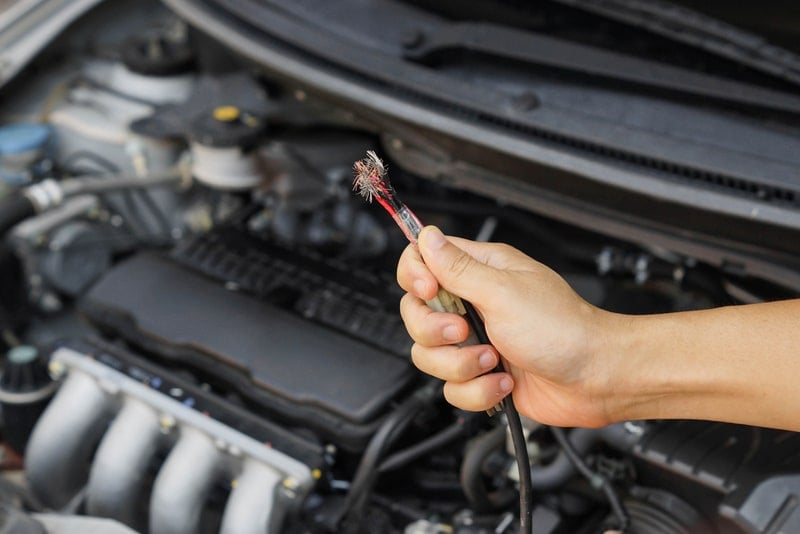
Intermittent Electrical Faults: Strange electrical behaviors—such as headlights flickering, erratic wiper speeds, or sudden battery draw that leaves your car dead overnight—frequently stem from wire jackets being stripped bare, allowing exposed strands to create parasitic drains or short against the metal chassis.
Physical and Chemical Deterrents That Work
Relying on a single repellent rarely keeps a persistent rodent away. The most effective approach combines mechanical protection, taste deterrence, and scent disruption.
Install Capsaicin-Infused Rodent Tape
One of the most effective mechanical deterrents available is specialized capsaicin-infused electrical tape. Originally engineered by Honda to counter widespread rodent damage, this heavy-duty polyvinyl tape is impregnated with intense natural capsaicin from chili peppers.
When a mouse or rat attempts to chew through the tape, the capsaicin delivers an overwhelming oral burn that causes them to immediately abandon the wire. Apply this tape generously around exposed harness sections, particularly near the firewall, along fuel injector wiring, beneath the fuse block, and around exposed sensor harnesses low in the engine bay. Wrap the harness tightly with at least a 50 percent overlap so no untreated wiring remains accessible. Wear protective gloves and wash your hands thoroughly after handling capsaicin tape.
Deep-Clean and Degrease the Engine Bay
Rodents navigate primarily through scent and pheromones. Once an animal enters your vehicle, it marks the territory with urine and sebaceous secretions. This scent marker signals to the rodent that the space is safe to return to, and it tells other passing animals that the territory is prime real estate.
If you spot signs of an intrusion, disconnect the negative battery terminal and thoroughly degrease the engine compartment using an automotive cleaner. Avoid blasting high-pressure water directly into alternators, fuse boxes, or computer modules; instead, use a soft detailing brush and low-pressure water to wash away droppings, debris, and pheromone trails from plastic covers, metal brackets, and firewall panels.
Deploy Concentrated Bittering and Scent Sprays
Commercial bittering agents and natural scent deterrents make engine surfaces unpalatable.
-
Pure Peppermint Oil: Genuine, undiluted peppermint essential oil contains high levels of menthol, which overwhelms a rodent’s sensitive olfactory system. You can mist a mixture of pure oil and water onto non-heated surfaces, or soak cotton balls and secure them inside breathable mesh pouches around the perimeter of the engine bay. Never place soaked materials directly against hot exhaust manifolds, catalytic converters, or turbochargers.
-
Denatonium Benzoate Sprays: Many commercial automotive deterrent sprays use denatonium benzoate (often marketed as Bitrex), the bitterest chemical compound known. Coating wire looms and plastic conduits with this spray makes them foul-tasting without damaging plastics or rubber. Reapply every three to four weeks, as heat and moisture will gradually degrade the coating.
Environmental Management and Parking Habits
Your vehicle’s vulnerability depends heavily on its immediate surroundings. Even the best under-hood deterrents can be overwhelmed if your car is parked in the middle of a feeding ground.
Eliminate Nearby Food and Water Sources
If you park in a garage, eliminate anything that draws animals inside. Store dog food, cat food, birdseed, and grass seed in airtight metal or heavy-duty plastic containers. Avoid keeping open garbage bins or compost containers inside or directly next to the garage structure.
Inspect the garage walls and doors. A small mouse can squeeze through an opening the size of a dime. Seal gaps along the bottom edge of your garage door with reinforced rubber sweeps, fill foundation penetrations with stainless steel wool or copper mesh, and seal remaining cracks with expanding foam.
Modify Outdoor Parking Tactics
When parking outdoors in a driveway, street, or rural property:
-
Avoid Overgrown Foliage: Never park for extended periods directly over tall grass, weed patches, leaf piles, or mulch beds, all of which provide cover for small mammals.
-
Keep Vehicles in Rotation: Daily commuter vehicles are much less inviting to nesting pests because regular engine vibration, heat cycles, and movement prevent rodents from establishing permanent shelters. If you store a secondary car, classic vehicle, or recreational vehicle, start it regularly, roll it to a different spot, and inspect it weekly.
-
Use Light to Your Advantage: Rodents avoid bright, exposed environments. If you must park outdoors in an area with heavy rodent activity, consider leaving motion-activated floodlights trained on the vehicle, or leave the hood resting open on the safety latch during bright daylight hours.
Assessing Electronic Repellers and Traps
Before spending money on gadgets, consider which tools produce measurable results and which rely on unproven claims.
Ultrasonic and Strobe Devices
Engine bay repellers emit high-frequency acoustic waves and flash bright LED strobes, wired directly to your 12-volt car battery with an inline fuse. While the strobe effect can disrupt nesting behavior, ultrasonic sound waves have limitations. Ultrasonic frequencies do not penetrate solid objects, meaning sound waves will not wrap around deep engine components or enter closed ductwork. Additionally, rodents can eventually habituate to repetitive sound frequencies. If you choose an electronic repeller, select a model that uses fluctuating multi-frequency sound patterns paired with erratic light pulses, and ensure it includes a low-voltage cutoff to avoid draining your battery.
Mechanical Trapping vs. Poison Baits
Snap traps placed strategically along the perimeter of your parking area remain the most dependable way to eliminate active rodent populations. Set traps flush against garage walls near vehicle tires, as rodents instinctively travel along vertical walls rather than across open floors.
Avoid using loose poison baits or anticoagulant rodenticides inside or near your vehicle. A poisoned rodent rarely dies out in the open. Instead, it typically retreats into the deepest, most inaccessible corner of your car—often inside the dashboard heater core or ventilation ductwork—before dying. The resulting odor of decay can linger for months and often requires thousands of dollars in labor to tear out the interior dashboard assembly just to remove the carcass.
Steps to Take If You Find Chewed Wires
If you discover damage, resist the temptation to make quick, makeshift fixes.
Modern vehicles rely heavily on Controller Area Network (CAN bus) communication lines. These circuits transmit digital signals between sensitive computer modules over tightly twisted pairs of wires. The systems depend on exact resistance values and microsecond signal timings. Splicing damaged CAN bus wires with basic wire nuts or poor crimp connectors introduces electrical resistance, which can trigger ghost fault codes, put the vehicle into limp mode, or cause safety systems to malfunction.
Non-critical leads—such as washer pump wiring, horn wires, or simple ground straps—can be spliced, soldered, and sealed with marine-grade heat-shrink tubing. However, if damage affects the main powertrain control module, transmission harness, or supplemental restraint system, consult a professional mechanic who has the specialized tooling and factory pin connectors required to maintain system safety.
Finally, check your auto insurance policy. Comprehensive insurance coverage typically covers damage caused by animals and pests, minus your deductible. If a full harness replacement estimate totals thousands of dollars, filing a comprehensive claim is often the most economical path to getting your vehicle restored safely.
Routine vigilance is your greatest asset. Check under your hood every time you check your oil or wash your car, keep your parking space clean, and apply proactive barriers before the cold weather sets in. A few minutes of prevention today will keep your vehicle running reliably and protect you from one of the most frustrating repair bills in modern car ownership.