9
The modern car-buying experience rarely falls apart over the negotiated price of the vehicle itself. Instead, the deal usually fractures in the quiet space between agreeing on a number and signing the final paperwork. That is where buyers encounter the second window sticker, commonly known in the automotive trade as the dealer addendum. Tucked beneath legitimate factory equipment listings, you will almost invariably find charges for nitrogen-filled tires and window glass VIN etching, often bundled with obscure appearance protections or door-edge guards.
Individually, these line items appear harmless enough to an exhausted buyer who has already spent three hours on the showroom floor. Combined, they routinely add anywhere from $800 to $2,500 to the out-the-door price of a new or pre-owned vehicle. Dealerships routinely present these charges as mandatory, pre-installed, or non-negotiable dealer policies. They are none of those things. Understanding why dealerships push these specific products, the negligible value they deliver, and the exact language needed to strip them from your buyer’s order will save you hundreds, if not thousands, of dollars.
The Addendum Sticker: Profit Masquerading as Protection
To dismantle these charges, you must first understand why they exist. On a new vehicle, the federal Monroney sticker lists the Manufacturer Suggested Retail Price, factory options, fuel economy figures, and destination charges. Dealerships cannot alter this document.
Next to the Monroney sticker, however, dealers frequently affix their own supplemental sticker. This paper creates an artificial second MSRP. Because internet pricing has flattened retail vehicle margins, dealerships generate very little profit on the base price of a popular car. To recover that margin, dealership management teams create “dealer protection packages.”
These packages carry almost zero wholesale cost to the dealership but represent nearly one hundred percent profit. When a finance manager convinces you to pay $299 for green valve stem caps and $499 for window etching, you are essentially making an outright financial contribution to the dealership’s overhead under the guise of an automotive service.
The Nitrogen Tire Gimmick: Chemistry Versus Sales Pitches
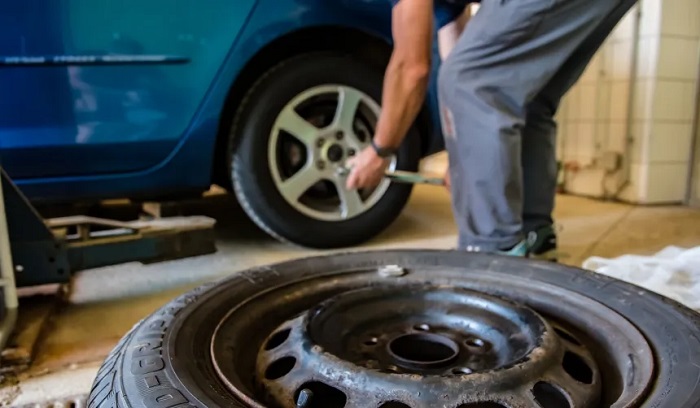
Few dealership upsells demonstrate the power of marketing over common sense quite like nitrogen tire inflation. The sales pitch sounds technically sophisticated: sales representatives will tell you that nitrogen molecules are larger than oxygen molecules, reducing pressure loss over time, improving fuel efficiency, extending tread life, and protecting your wheels from internal oxidation.
While these claims have a tiny grain of scientific truth in aerospace engineering and Formula 1 racing, they mean virtually nothing for a passenger car driving to the grocery store or commuting on the highway.
The Real Physics of Air
Ambient air is already roughly 78 percent nitrogen and 21 percent oxygen, with trace amounts of water vapor and noble gases. When a dealership fills your tires with “pure” nitrogen, the concentration inside the tire typically hovers around 93 to 95 percent. You are paying hundreds of dollars for an incremental shift of roughly fifteen percent.
Nitrogen does permeate through tire rubber slightly slower than oxygen, but the difference amounts to fractions of a pound per square inch over several months. Routine tire maintenance makes this benefit irrelevant. If you check your tire pressure once a month and top it off at a local station using standard ambient air, you achieve the exact same fuel economy, safety, and tread longevity without spending a dime.
The Real Cost Breakdown
Dealerships typically charge between $199 and $399 for nitrogen packages. The equipment required to generate nitrogen from shop air costs a service department a few thousand dollars upfront, after which the ongoing operational cost to fill four tires is virtually zero. When you purchase this add-on, you are paying a markup that can exceed several thousand percent above cost, all for colored plastic valve stem caps that serve only to advertise that you paid for free air.
VIN Etching: The Five-Hundred-Dollar Stencil
Vehicle Identification Number etching is another dealership staple presented as an indispensable anti-theft measure. The process involves permanently acid-etching or laser-engraving the vehicle’s unique seventeen-character VIN onto the corner of each window, including the windshield and rear glass.
The dealership pitch claims that etched glass deters professional car thieves because they cannot easily disguise the car’s identity or strip it for parts without replacing all the glass, which eats into their illicit profit margins. Dealerships often claim that insurance companies require it or offer massive discounts that offset the charge.
The Value Equation Fails
Etching does provide a minor deterrent effect against chop shops, but the pricing charged by car dealerships is completely detached from reality. Finance offices routinely bill $399 to $899 for VIN etching.
In the real world, you can buy an identical chemical stencil etching kit online for fifteen to twenty dollars and complete the entire process in your driveway in twenty minutes. Many municipal police departments and county sheriff offices host free etching events throughout the year to encourage vehicle security.
Furthermore, the promised insurance discounts are rarely significant. Most insurers offer a negligible discount on the comprehensive portion of your premium for anti-theft glass etching, typically amounting to five to ten dollars a year. It would take decades of ownership to break even on an eighty-dollar-per-year savings profile that cost five hundred dollars up front.
Common Dealership Tactics and Scripted Defenses
When you tell a salesperson or finance manager that you do not want nitrogen tires or VIN etching, you will rarely hear an immediate agreement. Instead, dealership staff are trained to deploy specific deflections designed to make you feel as though removing the charge is impossible.
“It is already on the vehicle”
This is the most common defense. The salesperson will walk you over to the vehicle, point to the etched glass and green valve caps, and say, “We etch and fill every vehicle as soon as it comes off the transport truck. It’s already done, so we can’t remove the fee.”
The proper response is simple: their internal inventory processing decisions are not your financial responsibility. You did not order the service, and physical presence on the car does not obligate payment. Politely inform them that while the etching cannot be unetched, you will not be paying for it. If they wish to leave the nitrogen in the tires without charging you, they are welcome to do so; otherwise, they can empty the tires and refill them with standard air before delivery.
“It is company policy; our system will not let us print the contract without it”
Dealership computer systems and dealer management software allow management to modify or remove almost any non-tax line item on a buyer’s order. When a salesperson claims the software prevents them from removing an addendum item, they are testing your willingness to push back.
A firm, calm clarification cuts through this claim: “Understood. If your management system requires those items to appear on the invoice, please discount the base price of the vehicle by the identical dollar amount to zero them out. The final out-the-door number must reflect the agreed purchase price without these charges.”
“We include a road hazard or theft warranty with this package”
To justify the inflated pricing, dealers often attach a secondary third-party warranty to the etching or nitrogen. The etching might come with a limited payout if the car is stolen and totaled; the nitrogen might include tire replacement coverage.
These warranties are heavily loaded with fine print, exclusions, and deductibles that make successful claims frustratingly difficult. If you want road hazard protection or gap coverage, standalone products purchased independently or through your own insurance provider deliver far broader protection at a fraction of the cost.
A Step-by-Step Blueprint to Eliminate Forced Add-Ons
Walking onto a dealership lot without a strategy invites unnecessary confrontation. By controlling the conversation early, you can systematically remove unwanted fees before entering the high-pressure finance office.
1. Request the Out-the-Door Price Before Visiting
Never negotiate a monthly payment, and avoid negotiating purely on vehicle sale price. Always request an itemized Out-the-Door (OTD) sheet via email or phone before you ever set foot on the lot.
The OTD price includes the vehicle price, destination charges, state and local sales tax, government registration fees, legitimate documentation fees, and any dealer fees. If an addendum sticker containing nitrogen or etching appears on that preliminary sheet, instruct the internet sales coordinator to remove those line items in writing before scheduling your test drive.
2. Draw a Hard Line on Non-Government Fees
When reviewing the line-item breakdown, mentally separate the numbers into two categories: non-negotiable fees and negotiable charges.
Non-negotiable items consist solely of government fees: your state sales tax, county license fees, title charges, and official registration costs. Everything else—from the dealer documentation fee to nitrogen, etching, paint sealant, and fabric guard—is completely negotiable. Treat any fee that does not go directly to a state agency as money that belongs in your bank account, not the dealer’s pocket.
3. Address the Items Before Reaching the Finance Office
Do not wait until you sit in the finance and insurance office to negotiate addendum items. The salesperson often attempts to defer these questions by saying, “We can discuss the protection package with the finance manager.”
Refuse to defer the conversation. The numbers must be finalized on the four-square or purchase worksheet before you sign an agreement to proceed to finance. Once you step into the finance office, your psychological momentum is focused on closing the deal, which weakens your bargaining resolve. Settle the elimination of nitrogen and etching with the sales floor desk manager first.
4. Use Precise, Dispassionate Language
Avoid arguing about the technical validity of nitrogen or the merits of etching glass. When you debate product quality, you give the dealership an opening to defend their offering. Instead, make it entirely a matter of contract willingness.
Useful phrasing includes:
-
“I have budgeted for the car, the mandatory taxes, and the official registration. I do not pay for dealer addendums, and I will not purchase these accessories.”
-
“I understand your store installs these items routinely, but I did not request them. Please remove the line items from the purchase agreement so we can proceed.”
-
“If these charges must remain on this contract for this transaction to occur, let me know now so I can look at other inventory elsewhere.”
The Power of Walking Away
Car dealerships spend enormous sums of money on marketing to get consumers through their doors. They track foot traffic and close rates rigorously. Sales staff know that once a customer walks out the door, the probability of closing that deal plummets.
If a sales team digs in their heels and insists that a $399 nitrogen fee or a $499 VIN etching charge is mandatory, recognize that you hold the ultimate card: physical departure. Stand up, shake hands politely, thank them for their time, and walk toward the exit.
In a significant percentage of cases, a sales manager will intervene before you reach your car to find a way to waive or offset the fee. If they let you leave, they have done you a service. A dealership willing to lose a multi-thousand-dollar transaction over a twenty-dollar chemical etching kit is an operation that will likely present further complications during delivery, financing, and post-sale service. Plenty of competing dealerships will gladly sell you the exact same car without charging you hundreds of dollars for a breath of fresh air.