12
Severe weather events and flash floods across the United States routinely submerge hundreds of thousands of vehicles every year. While an insurance company will readily declare a water-logged vehicle a total loss, that designation rarely marks the end of the car’s journey. Many of these submerged vehicles are purchased cheaply at salvage auctions, dried out, cosmetically detailed, and transported across state lines to regions where flood activity was never on the local radar.
By the time one of these cars lands on a used vehicle lot or an online private marketplace, it often looks showroom-ready. Professional detailers can extract mud, steam-clean fabric, and polish paint until the exterior looks immaculate. Beneath that pristine facade, however, floodwater acts as a slow-acting poison. It penetrates sealed electrical looms, corrodes internal metal brackets, and deposits abrasive silt into mechanical components, initiating electrical nightmares and mechanical failures that can take months to fully surface.
Spotting a flood-damaged vehicle that has been deliberately disguised requires looking past the glossy paint and investigating the hard-to-reach crevices where water leaves permanent evidence.
The Olfactory Deception: Masked Odors and Replaced Materials
Your sense of smell is frequently your first warning sign, though modern refurbishers work hard to counteract it. Water that penetrates automotive sound deadening, seat foam, and carpet backing breeds mold and mildew within forty-eight hours. Once established in dense padding, that swampy, musty odor is nearly impossible to eradicate completely.
Sellers often attempt to mask this scent by overloading the cabin with industrial deodorizers, ozone treatments, or heavy vanilla air fresheners. If you open the door of a seven-year-old vehicle and get hit with a wall of chemical perfume, treat it as an immediate red flag. Close all the windows and doors, let the car sit in the sun for ten to fifteen minutes with the air conditioner off, and step back inside. The ambient heat will coax trapped moisture out of the foam, releasing a distinct earthy or sour dampness beneath the perfume.
Pay equal attention to interiors that look unusually fresh. If an older, high-mileage commuter vehicle features brand-new carpet or upholstery that does not match the wear pattern of the steering wheel and door panels, ask yourself why. Installing entirely new carpet is an expensive, labor-intensive chore that average owners rarely undertake unless the original floorboards were ruined by standing water.
Deep Interior Checkpoints Detailers Always Overlook
While detailers excel at surface cleaning, they rarely dismantle an interior to scrub non-visible structural components. A small flashlight and five minutes of deliberate inspection can reveal issues no quick wipe-down can hide.
The Full Seatbelt Extension Test
One of the fastest and most reliable checks requires nothing more than your hands. Pull the driver and passenger seatbelts out smoothly to their absolute mechanical limit. Inspect the fabric of the webbing near the very end, close to the retractor reel hidden deep inside the B-pillar.
If a vehicle sat in water, that hidden section of webbing will frequently show a distinct waterline, brown mud staining, or mildew spots. Detailers routinely clean the visible parts of the seatbelt but almost never pull forty inches of unused belt from the reel to scrub the base. While you have the belt fully extended, check the metal mounting anchor and the retractor mechanism inside the trim opening for signs of surface rust.
The Underside of the Dashboard
Crawl into the front footwells, point your flashlight upward, and inspect the structural components beneath the steering column and glove compartment. Automakers use raw, untreated stamped steel for structural dashboard braces, pedal bracket assemblies, and steering shaft linkages.
Under normal operating conditions, these interior metal brackets remain dry and maintain a clean, dull gray finish for decades. If a vehicle has been submerged, these unpainted brackets oxidize rapidly, showing flaking orange surface rust that looks drastically out of place inside an enclosed passenger cabin. Look closely at the wiring harness bundles routed under the dash as well; muddy residue or dried silt trapped in the convoluted plastic tubing or around electrical wire wraps is a certain giveaway.
Beneath Carpet and Trunk Linings
Lift the edge of the carpeting along the door threshold by popping off the plastic kick panel. Feel the jute padding beneath the carpet. This fiber backing is thick and acts like a sponge; if it feels damp or crumbly, water has found its way into the floor pan. Inspect the metal floorboards underneath for silt deposits or premature rust around drain plugs.
Move to the cargo area and lift the spare tire cover. Remove the spare tire, the tire iron, and the jack from the recess. The spare tire well represents the lowest point of the trunk and routinely traps standing floodwater. Look for dry waterlines along the painted metal walls, rusted mounting studs, or a layer of powdery brown silt settled into the lowest seams.
Tracing Silt, Corrosion, and Electrical Gremlins
Water wrecks modern vehicles primarily through their electrical architecture. Modern automobiles rely on dozens of interconnected microprocessors and complex wiring networks running along the floorboards and behind exterior panels.
Pop the hood and inspect the main fuse box and power distribution block. Open the plastic lid and look between the individual fuses and relays. If you spot powdery green or white corrosion around the copper prongs, water has breached the electrical box. Pull back the rubber boots on wiring harness connectors around the firewall. If silt or moisture spills out, the harness has been submerged.
When you start the car, observe the instrument cluster during the initial key cycle. Every warning light—ABS, airbags, check engine, traction control—should illuminate momentarily as the onboard systems run their self-test, and then extinguish. Unscrupulous sellers sometimes disconnect or black out specific dashboard indicator bulbs to conceal permanent trouble codes caused by flooded sensors.
Test every single electronic accessory inside the cabin multiple times. Cycle the power windows, lock and unlock doors, run the power seats through their full range of motion, and test the infotainment and climate controls. Submerged electronic switches often suffer from high electrical resistance, resulting in slow motor speeds, intermittent operation, or strange cross-circuit behaviors, such as the wipers activating when you tap the turn signal.
Hidden Clues Under the Hood and Beneath the Undercarriage
An engine bay can be pressure-washed and sprayed with silicone shine to look spotless, but high-pressure water cannot reach every crevice without leaving evidence.
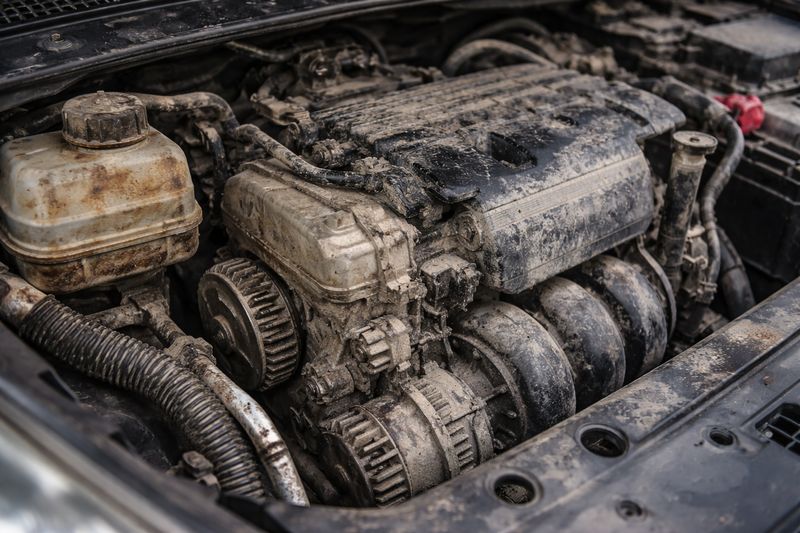
Inspect the delicate aluminum cooling fins of the radiator and air conditioning condenser. Floodwaters carry road sand, gravel, and river silt that pack tightly into the matrix of these cooling fins. Similarly, examine the recesses of the alternator, starter motor casing, and power steering pump. Silt that settles into these cast-iron and aluminum pockets dries into a hard, caked mud that an engine bay wash will miss.
Pull the engine oil dipstick and check the automatic transmission fluid. If water mixed with the engine oil, the fluid will look like opaque chocolate milk rather than clear amber or black oil. When checking the air filter box, remove the paper air filter element and look inside the lower plastic air duct. A vehicle caught in a flood often sucks water into the intake tract, leaving fine silt deposits and warped or water-stained paper filter pleats.
Underneath the car, inspect the exhaust heat shields, brake calipers, and suspension control arms. While vehicles driven in cold-weather climates naturally develop undercarriage rust from road salt, flood-induced rust looks different. Road-salt corrosion concentrates along exposed edges and wheel wells; flood damage produces widespread, uniform oxidation across structural components, brake backing plates, and drive axles that typically do not corrode prematurely.
Protecting Yourself Before Finalizing the Purchase
A shiny exterior and a persuasive sales pitch should never substitute for independent verification. While modern cosmetic detailing can effectively disguise severe flood damage to the casual observer, water leaves a trail of physical clues that cannot be completely erased.
Before agreeing to buy any used car, invest in an independent pre-purchase inspection conducted by a trusted mechanic. Inform the technician specifically that you want the vehicle evaluated for flood signs. A professional can hoist the car onto a lift, inspect the wheel bearings and differential breathers, and run an advanced diagnostic scan that reveals communication faults across individual electronic control modules. Taking the time to check seatbelt reels, peek under the dash, and inspect unpainted components takes only a few minutes, but it will save you from adopting an expensive, unreliable financial disaster.